

Comparing property repair quotes is difficult when one contractor prices a complete reinstatement and another allows only for the visible repair. The totals may look comparable even though the work is not.
Start by putting the documents beside the same description of the job. Your aim is to understand the differences before choosing a contractor, rather than assuming the lowest figure represents the same result.
Give Each Contractor The Same Brief
Provide the affected rooms, available reports and the finishes you want priced. Explain any access restrictions, occupied areas and work being arranged by someone else. If a specification exists, give each contractor the same version.
The Federation of Master Builders’ hiring guide recommends comparing detailed quotations on a like-for-like basis. Keep a note of questions asked during site visits so you can give the other contractors any relevant clarification too.
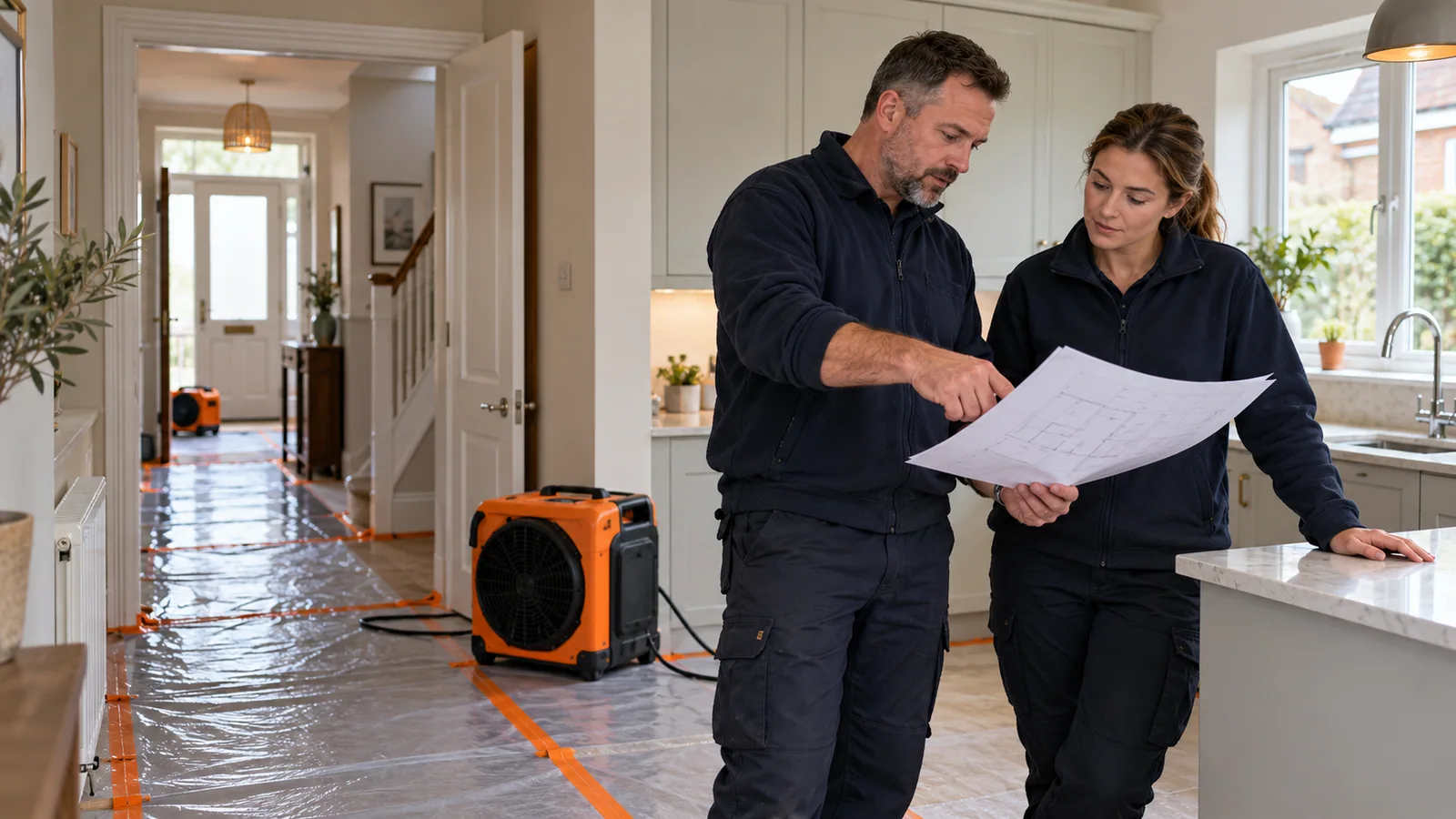
Give each contractor the same repair information so differences in the quotations are easier to identify.
Check What Happens Before The Visible Repair
Read the preparation as carefully as the finish. Does the document allow for removing damaged material, protecting adjacent rooms and making good after another trade? Ask whether specialist checks or drying must be completed first.
For example, “replace damaged flooring” leaves several questions open. Which rooms and floor area are included? Who removes the existing finish? What preparation is allowed for? What happens if an issue is discovered underneath? Ask for the intended scope to be spelled out.
Identify Exclusions And Uncertain Allowances
Highlight work that is excluded or described as provisional. Ask what each allowance covers and what could cause it to change. Check whether waste removal, access equipment and relevant taxes are included in the total.
Citizens Advice’s guidance on arranging building work explains the importance of written quotations and clear pricing. Confirm whether the document is a quotation or an estimate and ask about its assumptions before accepting it.

A site discussion is useful, but the agreed work, exclusions and price should also be recorded in writing.
Discuss Payment Stages And Responsibility
Ask when payments fall due and what work each stage represents. Confirm who is your main contact, who will manage subcontractors and how delays will be communicated. Check the contractor’s relevant insurance and experience of similar repairs.
Where an insurer is involved, establish who is appointing and paying the contractor. Do not assume that receiving an insurance settlement also amounts to approving a particular quotation or authorising the contractor to begin. Get the relevant instructions in writing.
Resolve Differences Before You Accept
Send each contractor a short list of points that need clarification. Ask for a revised document if the answer changes the scope or price. Keep the agreed version and record how later changes will be approved and priced.
A clear quote cannot remove every uncertainty, especially where damage is concealed. It can make those uncertainties visible. Use our property repair quote form to explain the work you need and mention any reports or quotations already available.