


Storm damage roof repairs often involve two separate decisions: what is needed to protect the property now, and what will put the damage right properly. Keep those decisions distinct when speaking with a contractor or insurer.
A quick repair may be useful temporary protection. Ask what it does, how long it is intended to last and what further inspection or permanent work remains.
Keep Your Inspection At Ground Level
Do not climb onto a roof or use a ladder in unsafe conditions to collect evidence. From a safe position, record visible damage and any signs of water entering the building. Stay clear of loose materials and unstable structures.
Contact your insurer promptly if a claim may be involved. The ABI’s storm guidance recommends avoiding personal risk, discussing emergency work and keeping receipts. Ask a suitable contractor about safe access and temporary protection.
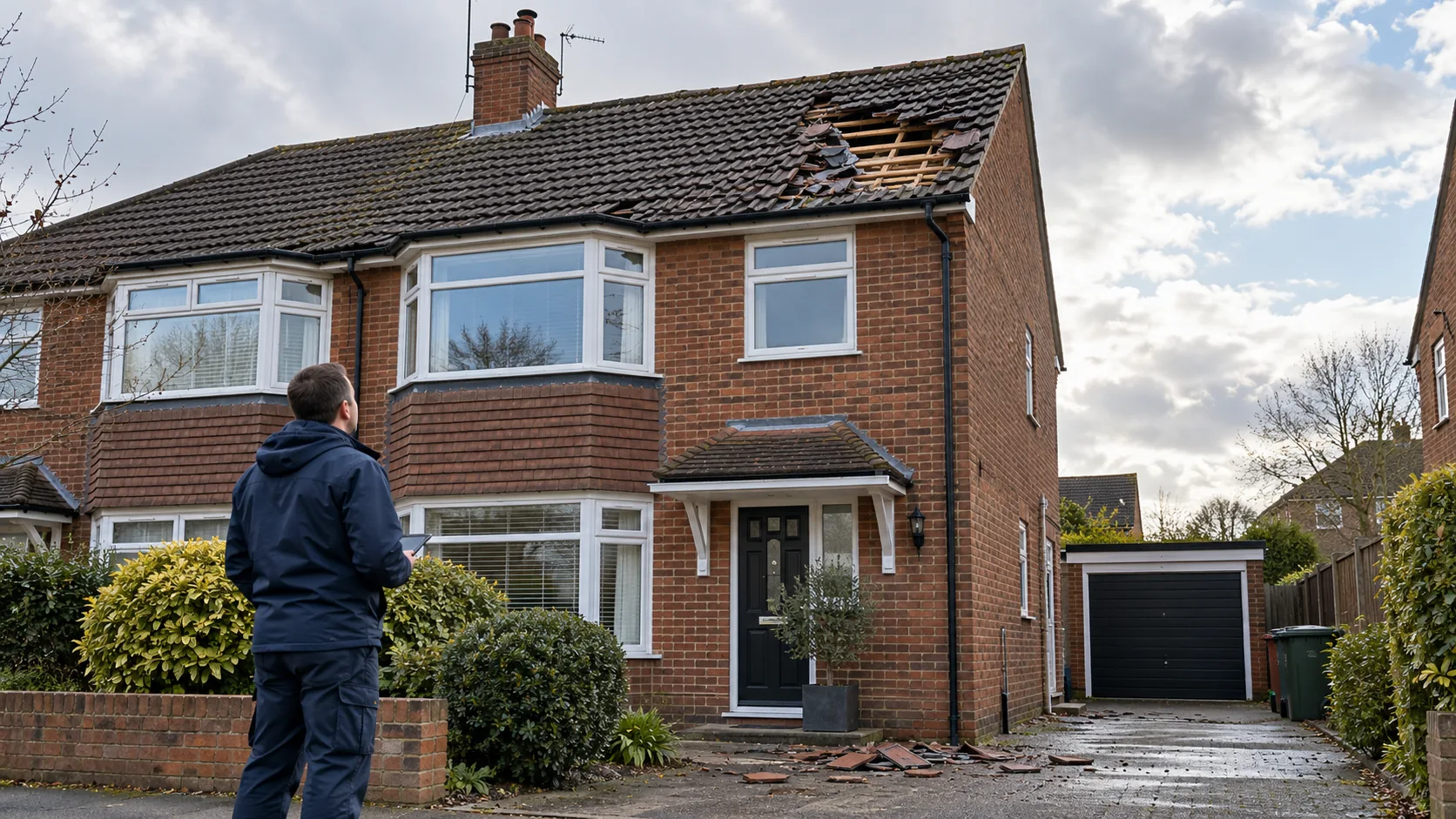
Roof damage should be assessed using suitable access arrangements; do not climb up to take photographs.
Record When The Damage Became Apparent
Write down when you first noticed the problem, what you could see and whether the property was occupied. Keep dated photographs, attendance records and any relevant maintenance information. If you were away, say so rather than guessing when the damage happened.
This creates a useful chronology for the people assessing the roof. It also helps distinguish what you observed from what a contractor later identifies during an inspection. Save the original photographs as well as any annotated copies.
Ask What The Inspection Has Established
Request a report that identifies the affected roof area, the proposed work and any limitations on the inspection. A photograph of a missing tile does not explain the condition of everything beneath it.
For insurance purposes, the cause matters as well as the weather. The Financial Ombudsman Service’s storm-damage guidance explains how weather evidence, the property’s condition and policy wording can be relevant. A storm occurring nearby does not guarantee that every roof defect is covered.

Discuss access, repair details and the distinction between temporary and permanent work before agreeing a scope.
Compare Temporary And Permanent Work Separately
Ask the contractor to itemise temporary protection and the proposed permanent repair. Clarify whether temporary materials will be removed and whether safe access equipment is included in each price.
Check which roof components and internal finishes are covered. For instance, a quotation to replace roof coverings may not include repairing a stained bedroom ceiling. Put any questions in writing so the final scope is clear to everyone involved.
Agree How Changes Will Be Handled
Some details may remain uncertain until safe access or opening-up is possible. Ask which costs are provisional, how further findings will be recorded and who must approve additional work. Keep permanent repair instructions separate from an emergency attendance request.
Our storm damage repair service can help you discuss the required trades and assessment. When work is complete, retain the scope, invoices, photographs and any relevant guarantees with the property records.