
Smoke damage after a house fire is not always limited to the most visibly blackened room. Before anyone starts decorating, the property needs an assessment of the damage, safety issues and suitable cleaning methods.
The useful question is not simply whether a wall can be repainted. It is what must happen before the room and its contents can be returned to use.
Confirm When It Is Safe To Enter
Follow the fire and rescue service’s advice about re-entry. A fire being extinguished does not mean the building or its services are safe. Keep the incident information and note any utilities that were isolated.
Do not reconnect gas or electricity yourself. Essex County Fire and Rescue Service’s after-fire guidance explains the handover information you may receive and the need for qualified checks. If you rent, tell the landlord or managing agent as well as your insurer.
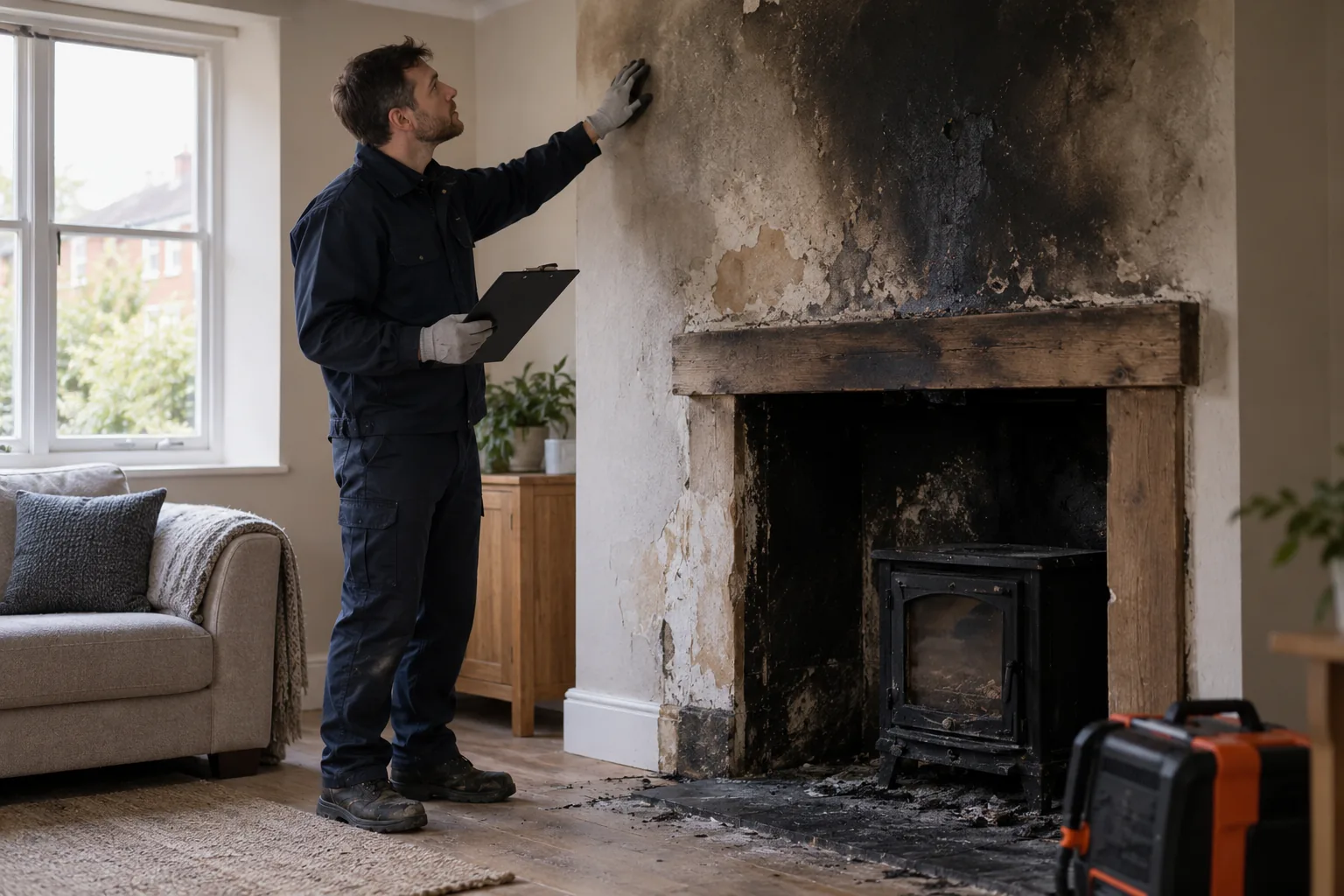
A fire-damage assessment considers smoke and soot residues as well as visible damage.
Describe The Damage Room By Room
When access is safe, record visible staining, residue and affected belongings without disturbing them. Note which rooms you have photographed and when. Include areas adjoining the room where the fire started so the assessor can decide what needs checking.
Keep your observations separate from conclusions. “Soot visible above the landing door” is useful information. It does not, by itself, establish how far contamination extends or which materials need replacing. Ask the specialist to explain the inspection findings.
Agree A Cleaning Method Before Redecorating
Different surfaces and belongings may need different treatment. Avoid experimenting with household products on smoke-damaged finishes. Gloucestershire Fire and Rescue Service warns against washing or wiping fire residues from absorbent surfaces and highlights the risks that remain after a fire.
Ask what the proposed cleaning covers, which materials may need removal and how the results will be reviewed. Check whether any water used during firefighting also needs assessment. Painting over a mark should not substitute for understanding the condition beneath it.
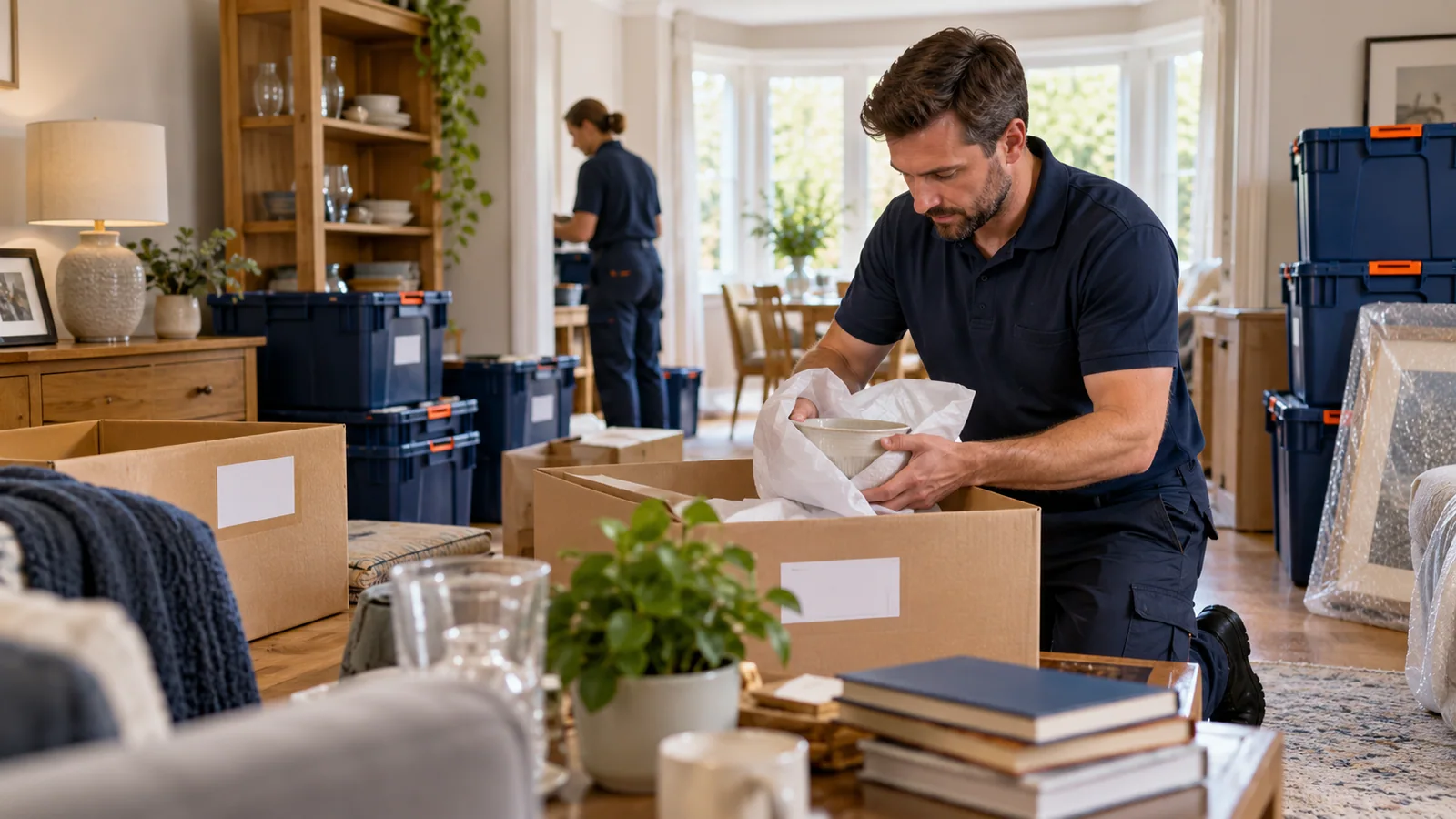
Record affected belongings and agree handling, storage or disposal before items are moved.
Keep A Clear Record Of Affected Contents
Make an inventory with descriptions, photographs and any available purchase information. Ask your insurer what it needs before items are discarded, unless an item presents an immediate health or safety risk. Take advice about safe handling.
If belongings are removed, request a list showing what has gone, where it is stored and who is responsible for it. Mark any items with particular personal significance so the specialist can discuss realistic options before work begins.
Separate Cleaning, Repairs And Insurance Decisions
A written scope should distinguish cleaning, removal, specialist checks and reinstatement. Ask what is excluded and who will coordinate the trades. This makes it easier to understand a quotation and the order in which work is proposed.
The insurer decides cover under the policy; a restoration contractor assesses and carries out the agreed work. Our fire restoration service can help you discuss those practical requirements. Keep reports and approvals together as the plan develops.