
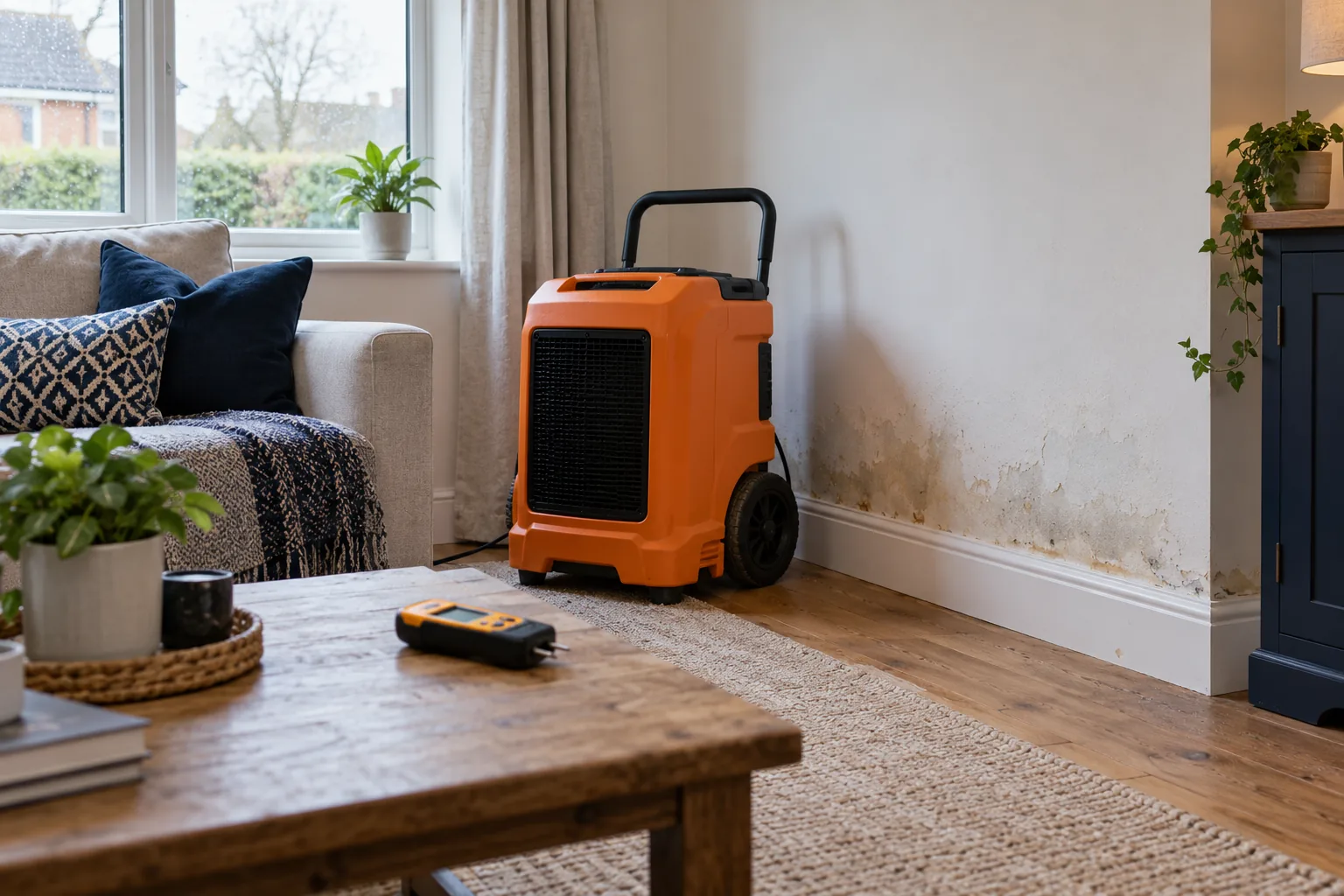
Drying after water damage needs a clear endpoint. The stain may have faded and the room may feel warmer, but those changes alone do not tell you whether the affected materials are ready for repairs.
Before you book a decorator or order new flooring, ask who is checking the moisture condition and how that decision will be recorded. A short conversation now can prevent a disagreement between the drying team and the next trade.
Start With The Source Of The Water
Confirm that the leak or other water source has been addressed. If water is still entering, a drying programme cannot resolve the underlying problem. Keep the plumber’s report or other findings with your repair paperwork.
Explain where the water travelled, not just where the first stain appeared. For example, a bathroom leak might affect the ceiling below and a floor void. Tell the assessor about changes in neighbouring rooms, without lifting materials or entering unsafe spaces yourself.
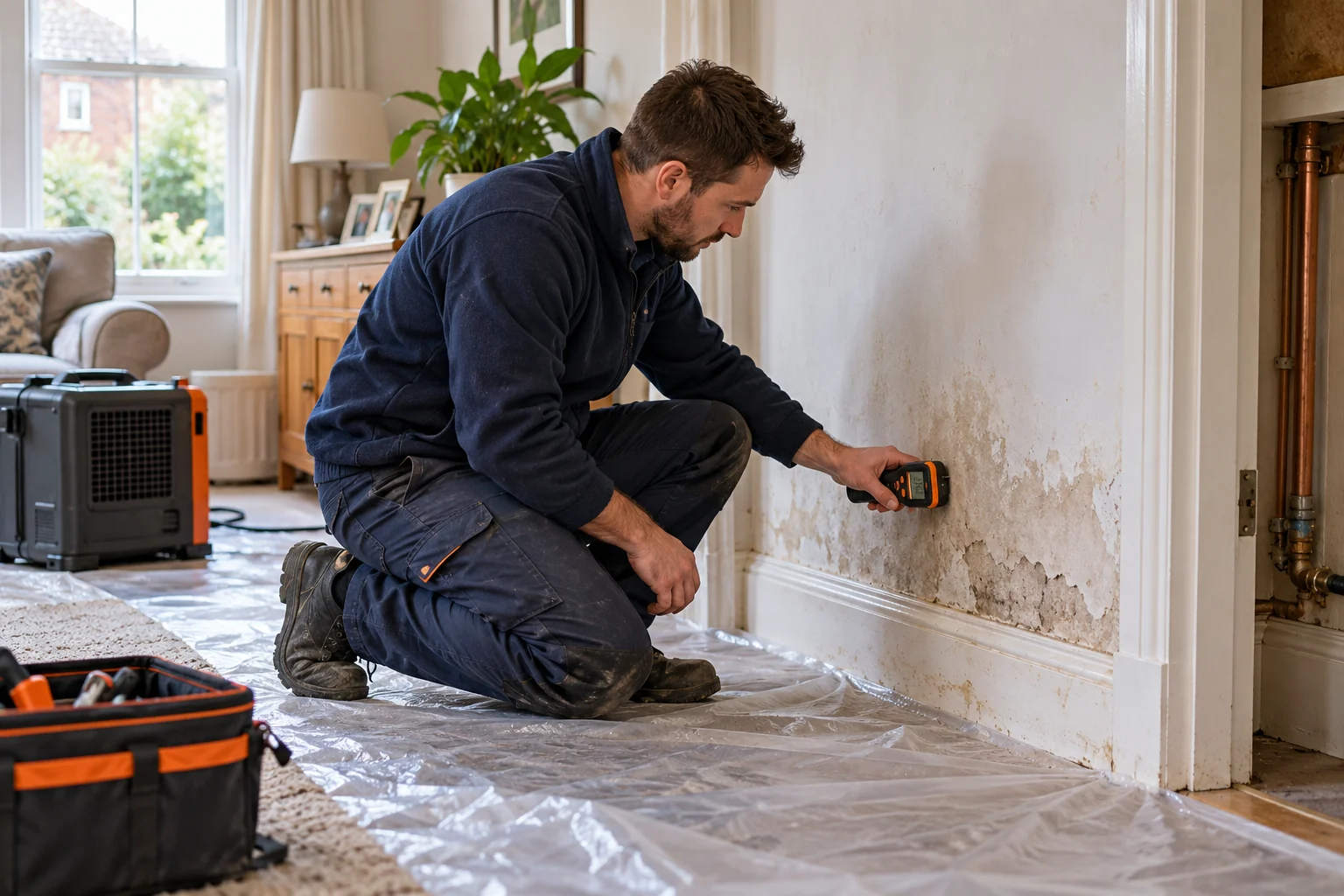
Moisture checks should inform the repair plan, rather than relying on how a surface looks.
Ask What Is Being Measured
A moisture assessment helps establish which materials are affected and what further investigation may be needed. Ask which locations have been checked and whether the same points will be monitored as drying progresses.
You do not need to interpret a meter reading yourself. Instead, ask the specialist to explain what the results mean for your particular walls, floors and proposed finishes. There is no single reading or fixed number of days that suits every damaged property.
Keep The Drying And Repair Teams Connected
Give the contractor carrying out reinstatement a copy of the drying information. Ask whether the proposed plaster, flooring or adhesive has any specific preparation requirements. If the teams disagree about readiness, resolve that point before work starts.
After flooding, cleaning and contamination issues may also need attention. Government flood-recovery guidance explains why the recovery process includes cleaning and drying. Do not operate affected electrical equipment until a suitably qualified person has confirmed it is safe.

Flooring installation follows the preparation and moisture checks appropriate to the materials.
Request A Record Of The Handover
Ask for the final drying report or other written confirmation of the assessment. It should make clear which areas were considered and any limitations or further work identified. Keep this alongside photographs and the agreed repair scope.
The ABI’s flood-recovery guide describes drying confirmation before reconstruction. Ask your own drying specialist and insurer what records are appropriate for your incident; a small clean-water leak and a major flood need different responses.
Plan The Next Trade Around The Evidence
Avoid fixing a decoration date solely because drying equipment has been collected. Confirm the handover position, material requirements and any outstanding inspections first. Tell your contractor if new staining or other changes appear.
For help arranging an assessment and the subsequent work, explore our escape of water restoration service. Our property restoration overview explains how these stages fit together.