
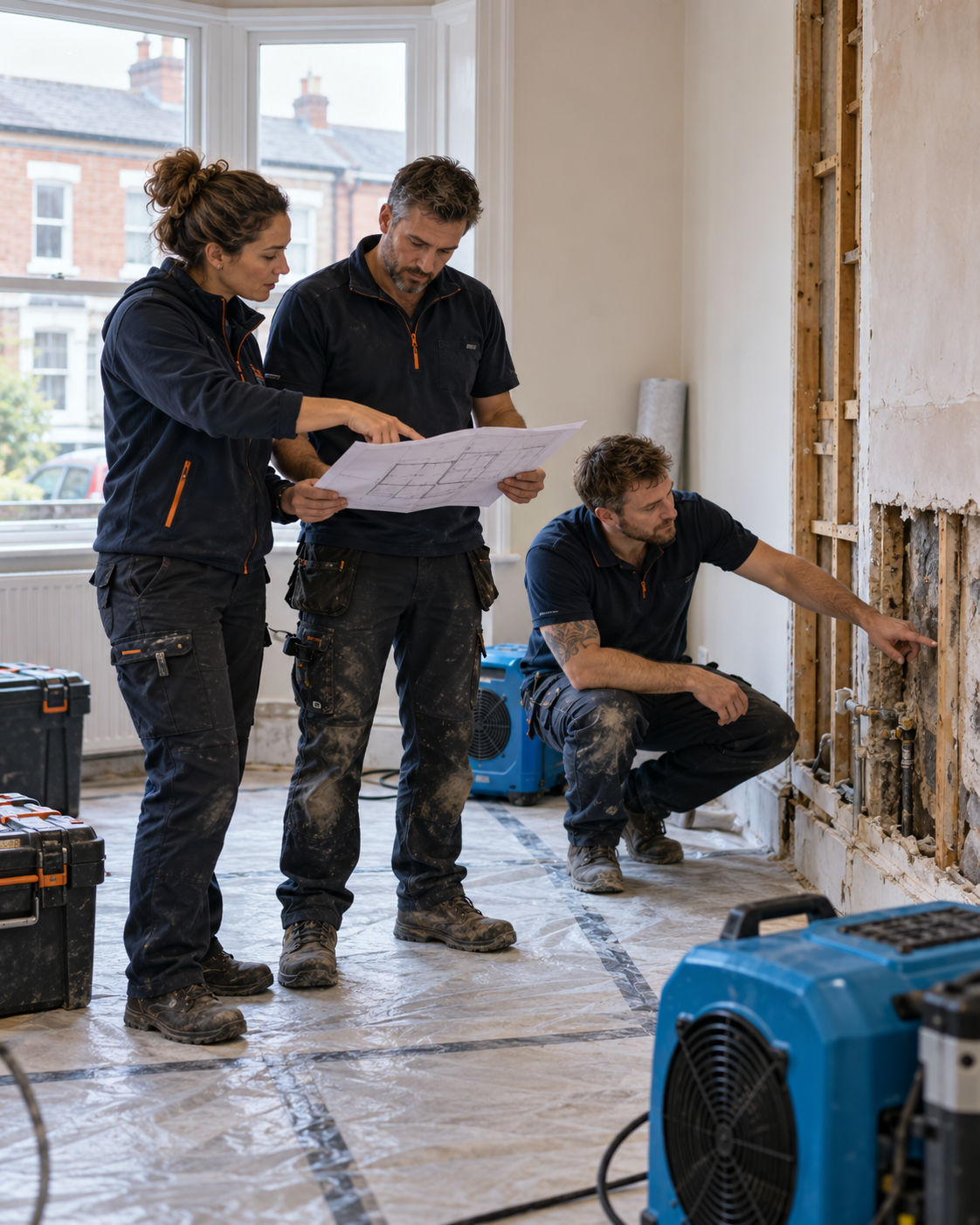
Property restoration involves more than repairing the damage you can see. Before finishes go back, the repair team needs to understand what happened, which materials are affected and what needs to be made safe, dried, cleaned or replaced.
Start With The Cause And The Condition Of The Property
A restoration assessment should establish the likely source of damage and the areas that need further investigation. A leak may affect a floor below the room where it started. Smoke residues can spread beyond the fire itself. Impact damage may need structural advice before repair work can be planned.
Keep clear of unsafe rooms and damaged electrical installations. Use suitably qualified specialists for electrical, structural and other safety concerns. If there is an immediate threat to life, contact the emergency services.
Record The Damage Before Work Changes The Evidence
Where it is safe, photograph affected rooms, damaged items and visible signs of the cause. Keep a short record of when you noticed the problem, who attended and what temporary work was carried out. Retain reports, quotations and receipts together.
If an insurance claim is involved, ask the insurer what records and approvals it needs. A contractor’s assessment supports the repair plan; it does not determine whether your policy covers the damage.
Understand The Work Needed Before Reinstatement
The preparation depends on the damage. Water-affected materials may need moisture assessment and controlled drying. Fire damage may require specialist cleaning and removal of affected materials. Storm or impact damage may need temporary protection and a building assessment.
Ask what checks will be used to decide when the property is ready for repairs. A surface that feels dry or looks clean does not explain the condition of the materials beneath it.
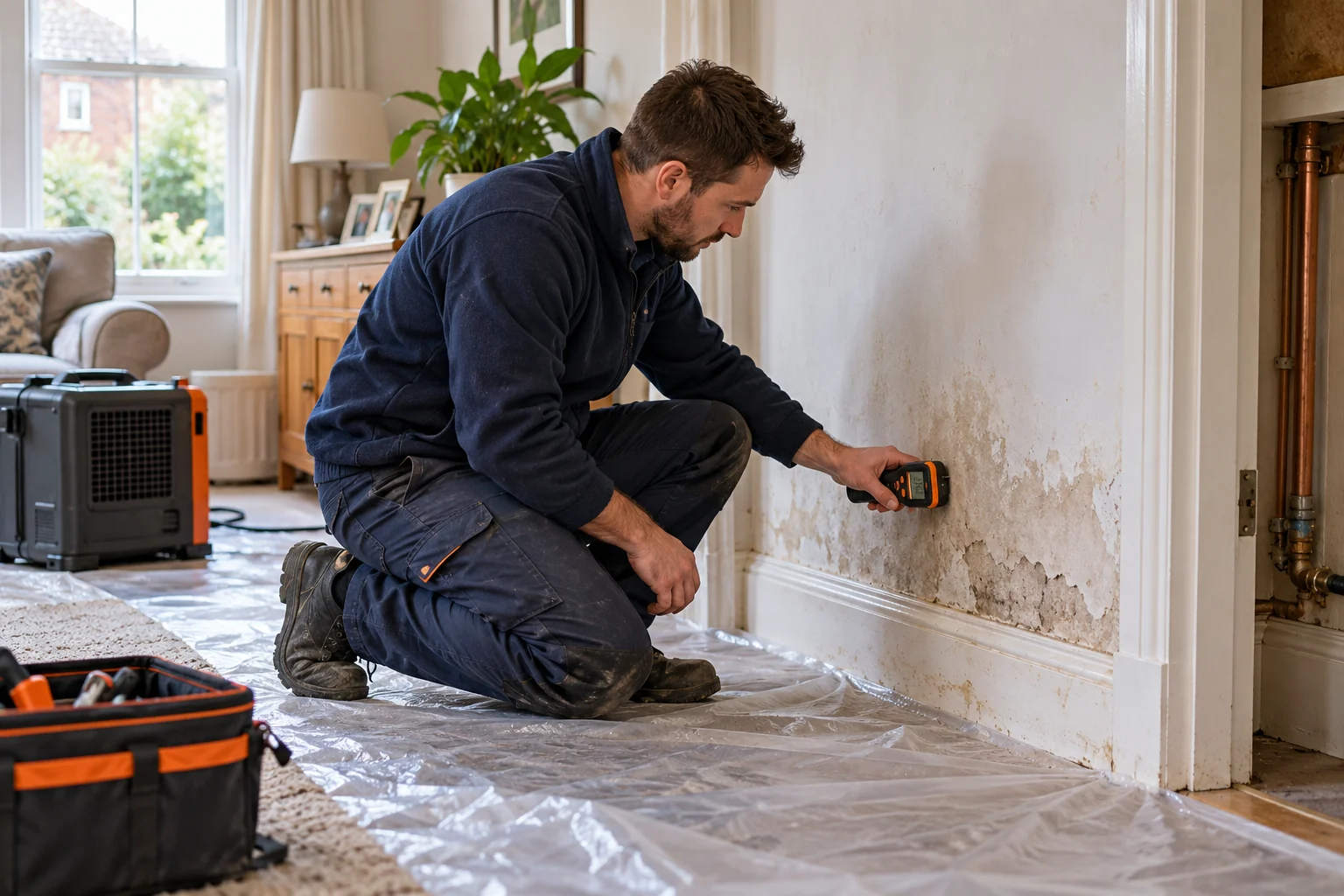
Moisture readings help assess water-affected materials before reinstatement is planned.
Ask For A Clear Scope Of Repairs
A useful repair quotation should describe the areas covered, proposed work, materials, exclusions and any assumptions. It should also explain which specialist trades are involved and what could change if further damage is uncovered.
- Which rooms and building elements are included?
- What preparation or drying must finish first?
- Who is arranging specialist inspections and certificates?
- How will changes to the agreed work be recorded and priced?
- What access, protection and disruption should you expect?
Agree The Sequence And Keep Decisions In Writing
Restoration often involves several trades. Agree who is coordinating the work, how progress will be reported and when you need to make choices about finishes. Discuss practical needs such as access, working hours and protecting unaffected rooms before work starts.
Timescales depend on the damage, drying requirements, investigations, materials and agreed scope. Ask for a realistic programme and an explanation of any dependencies, rather than relying on a completion date before the property has been assessed.
Check The Completed Work And Keep The Handover Records
Walk through the agreed work with the contractor. Record outstanding items, confirm how they will be resolved and collect the reports, certificates, care instructions and guarantees that apply to the work carried out.
Keep these records with the original scope and any agreed changes. They provide a useful reference if you have questions later.

A clear repair plan helps the specialist trades work to the same agreed scope.
Find The Right Support For The Damage
The Callout Network helps connect property owners and professionals with services involved in assessment, mitigation and repair. Explore our property restoration services, including escape of water restoration and fire restoration, or contact the team to explain what has happened.
This guide provides general information. The checks and work needed depend on the property, the damage and advice from the relevant specialists.